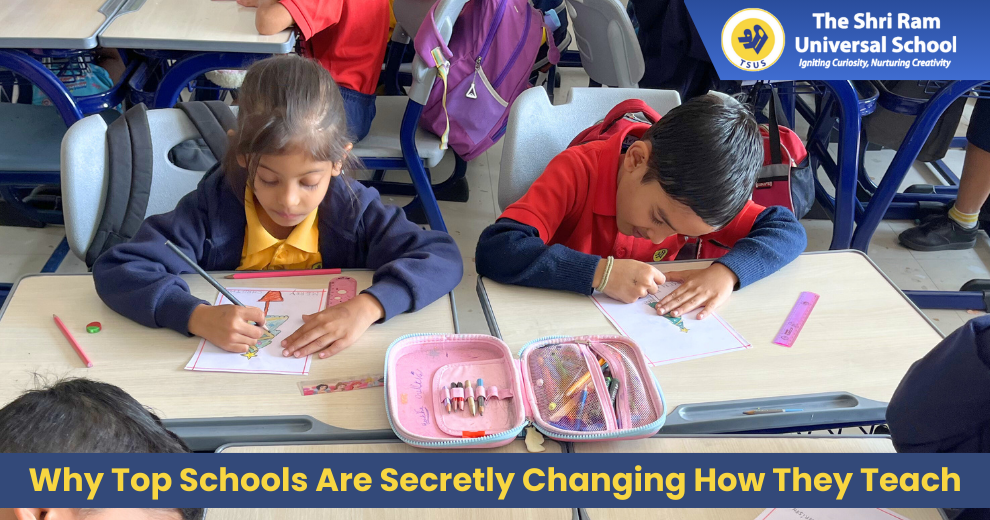
Education rarely changes loudly. The deepest shifts often happen behind classroom doors, guided by experience, not headlines. Parents sense something different when students speak with confidence, curiosity, and calm reasoning. That difference comes from how learning is shaped, measured, and supported daily. Leading institutions now question old classroom habits and quietly redesign teaching to match how children actually think, grow, and engage with knowledge.
Rethinking Learning Beyond Examination Outcomes
Strong academic results still matter, yet thoughtful schools now view them as one outcome, not the only purpose. Teaching strategies increasingly prioritise comprehension, reasoning, and long term retention over memorisation cycles.
Teachers observe how students process ideas, not how quickly they finish tasks. Lessons allow space for questioning, reflection, and structured discussion. This approach reduces learning anxiety and supports steady intellectual confidence.
Families searching for good schools in Wakad often notice this difference during classroom interactions rather than brochure promises.
Classroom Structures That Respect How Children Think
Modern classrooms now balance structure with flexibility. Rigid lesson pacing gives way to responsive teaching that adapts to student understanding.
This approach improves participation, attention span, and emotional comfort. Students engage without fear of immediate correction or public comparison. Teachers act as guides who observe learning signals and adjust delivery accordingly.
Such classrooms create conditions where students participate willingly and think independently.
Assessment Methods That Reveal Real Understanding
Assessment practices now focus on learning depth rather than performance pressure. Schools refine evaluation methods to capture reasoning, application, and clarity of thought.
This shift helps educators identify learning gaps early and respond with precision. Students receive feedback that supports progress instead of ranking.
Parents exploring the top 10 schools in Wakad Pune with fees often ask how progress gets measured beyond test scores. The answer increasingly lies in continuous observation and thoughtful evaluation.
Teacher Preparation as an Ongoing Professional Practice
Effective teaching depends on continuous learning among educators themselves. Progressive schools invest time in reflective training rather than fixed instructional templates.
Teachers regularly review classroom interactions, learning responses, and communication patterns. Peer discussions help refine methods and address challenges collaboratively.
This culture strengthens teaching quality across subjects and age groups. Students benefit from consistency without rigidity and expertise without authority distance.
Building Emotional Stability Through Academic Design
Learning environments influence emotional wellbeing directly. Schools now integrate emotional awareness into academic planning without isolating it as a separate programme.
A short explanation follows to frame the points clearly. Emotional stability develops through everyday classroom design choices, not occasional interventions.
- Predictable routines help students feel secure and focused.
- Respectful dialogue builds trust between teachers and learners.
- Balanced workloads reduce cognitive fatigue and disengagement.
Such design choices support attention, resilience, and classroom harmony.
Encouraging Responsibility Without Pressure
Responsibility grows when students feel trusted, not monitored constantly. Leading schools design systems that allow students to manage tasks with guidance rather than enforcement.
This section introduces the idea before outlining its elements. Responsibility emerges through structured independence, supported by consistent expectations.
- Clear instructions reduce confusion and dependency.
- Reflection time helps students review decisions calmly.
- Collaborative tasks build accountability within peer groups.
These practices prepare students for higher learning and adult environments naturally.
Conclusion
Educational excellence now depends on alignment between teaching intent and child development realities. Schools that evolve quietly focus on thinking quality, emotional balance, and instructional integrity. These institutions understand that meaningful learning lasts beyond academic calendars. Within this context, The Shri Ram Universal School (TSUS) reflects an approach shaped by thoughtful design, professional teaching practice, and a deep respect for how children truly learn.
 Call Us
 Chat Now